Google's Chrome 146, released in August 2026, includes document.modelContext, a browser-native API that allows websites to expose structured tools directly to AI agents, bypassing traditional methods such as DOM scraping, screenshot interpretation, and simulated clicks. The feature has reportedly attracted little developer attention since its release.
Third-party tracking data shows external links inside Google AI Overview answer text rose sharply from near zero to 26.2% between early and late September 2026, while a separate recording demonstrates that some underlined text in AI Overviews opens AI Mode rather than an external webpage. Google's own Search Console reports do not currently provide enough data to measure click-through rates from AI features.
AI developer infrastructure company Parallel reports that GPT-6 Astra halved both the time and cost of complex, multi-source labor-market research tasks compared with previous frontier models, while maintaining output quality and enabling more efficient multi-agent workflows.
Global communications agency TEAM LEWIS has unveiled Orbital OS1, an AI-powered operating system built to help multi-market organisations connect marketing intelligence, creativity, and public-facing delivery within a single platform, with human judgement retained at the centre of decision-making.
A tiered reference table published by SEO consultant Chris Green maps the data sources currently used by AI search tools such as Google Gemini, Microsoft Copilot, and ChatGPT, ranging from confirmed real-time grounding feeds to historical pretraining corpora, and urges search practitioners to broaden their focus beyond traditional web rankings.
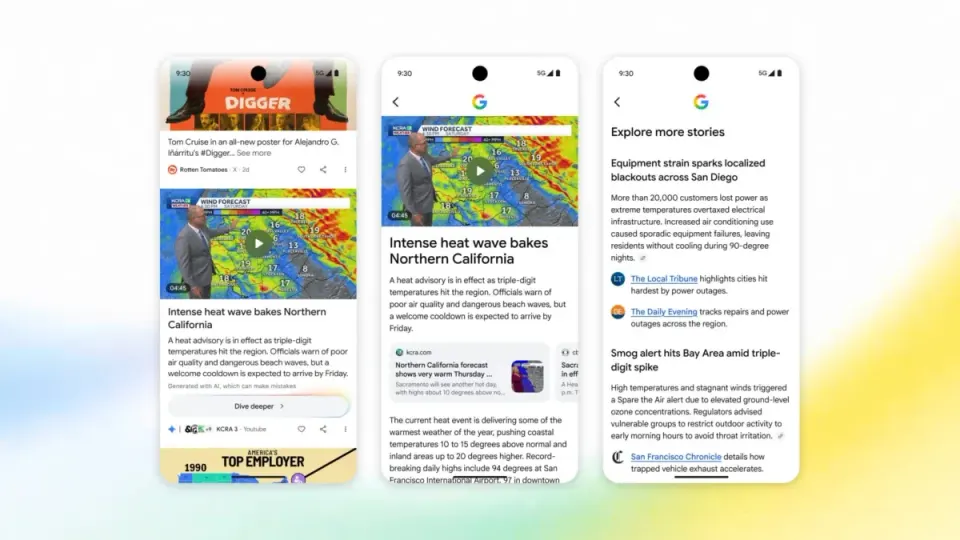
Google is rolling out an experimental "Dive deeper" feature in Google Discover that presents users with an AI-generated topic overview before linking to publisher articles, prompting concern from content creators and SEO professionals about potential declines in referral traffic.
Google, Cloudflare, and Microsoft are each piloting distinct systems to compensate publishers whose content powers AI-generated responses, but the three approaches differ significantly in how value is defined, what controls site owners hold, and how transparent the resulting data is.