Google Tests 'Dive Deeper' AI Feature in Discover, Raising Publisher Traffic Concerns
Google is rolling out an experimental "Dive deeper" feature in Google Discover that presents users with an AI-generated topic overview before linking to publisher articles, prompting concern from content creators and SEO professionals about potential declines in referral traffic.

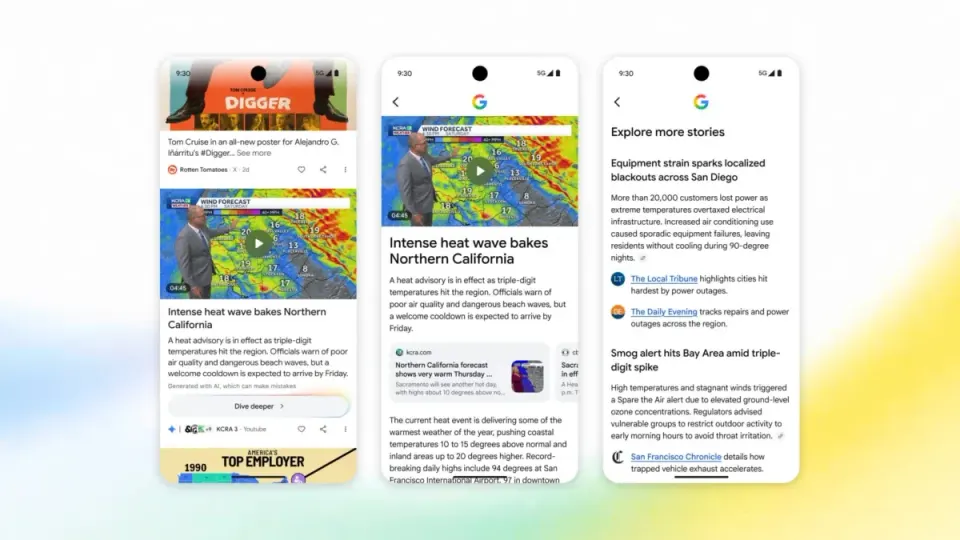
Google has begun testing a new feature in its personalized content feed, Google Discover, called "Dive deeper," which inserts an AI-generated topic summary between a user and a publisher's full article. The development has sparked fresh debate in the publishing and SEO communities about what AI intermediaries mean for web traffic and content monetization.
How "Dive Deeper" Works
When a user taps a "Dive deeper" card in Google Discover, they are first shown a concise, AI-generated overview of the topic rather than being taken directly to a publisher's website. Google labels the summary as "generated with AI" and accompanies it with a disclaimer that it "can make mistakes." The overview is designed as a gateway, featuring links to related stories, community reactions, and original reporting that users can follow to reach external sites.
Robby Stein from Google announced the feature, stating: "Today we're experimenting with a new way to make exploring a topic and discovering related web content easier in Discover. By tapping 'Dive deeper,' you'll see a short topic overview with prominent links to related stories, community reactions & original reporting."
The initial testing phase focuses on video content. Google has indicated it plans to experiment with multiple design iterations in the coming weeks to determine the most effective user experience.
Publisher and Industry Concerns
The primary concern raised by publishers and industry observers is a potential reduction in referral traffic. Google Discover has grown into a substantial platform, reportedly serving hundreds of millions of users globally and representing a critical source of referral traffic for many publishers. If users can obtain sufficient context from Google's internal AI summary without clicking through to an external article, the incentive to visit a publisher's site may diminish, with knock-on effects for advertising revenue and subscription conversions.
The apprehension fits into a broader, long-standing tension between Google and content publishers, in which changes to Google's features and algorithms have historically shifted traffic patterns in ways that concern the industry.
SEO and Strategic Implications
The feature introduces new optimization challenges. Publishers that have traditionally aimed for direct clicks from Discover may need to consider how their content is selected and represented by Google's AI summarization layer. Industry observers have noted that key performance indicators may need to shift — brand mentions within AI summaries or prominence in "related stories" links could become important new metrics alongside traditional page-view counts.
The development also reinforces calls for publishers to diversify traffic sources beyond reliance on any single platform, focusing more on direct traffic, email newsletters, and social media channels.
Accuracy and Ethical Questions
Google's own disclaimer that its AI-generated summaries "can make mistakes" has been highlighted as a significant ethical consideration. Concerns include potential inaccuracies in summaries, questions about proper attribution to original reporting, and the risk that AI models trained on large datasets could inadvertently reflect inherent biases in the content they synthesize.
The "Dive deeper" feature is consistent with Google's broader strategy of AI-driven information synthesis, including its experimental Search Generative Experience, which provides AI-powered overviews directly within search results. Google has said it will continue to iterate on the feature's design in the weeks ahead.
Prepared with AI assistance and reviewed by the editorial team.