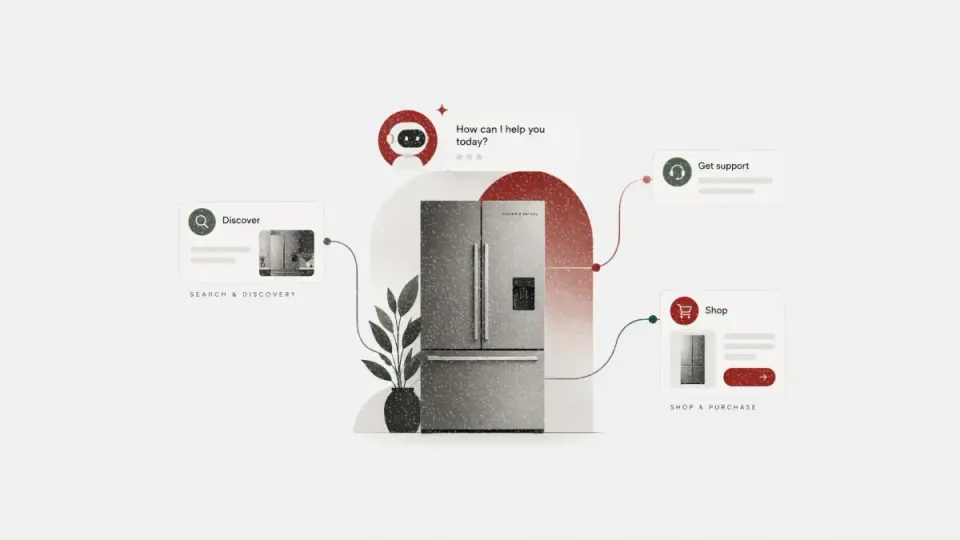
Fisher & Paykel's chief digital officer Rudi Khoury says customers are already using GPT-style tools as research interfaces, pushing the appliance company to treat AI as a marketing and discovery problem, not just a customer-service efficiency tool. The company's Agentforce-based service agent and broader roadmap reflect a view that discovery, service and conversion are converging inside conversational AI environments.
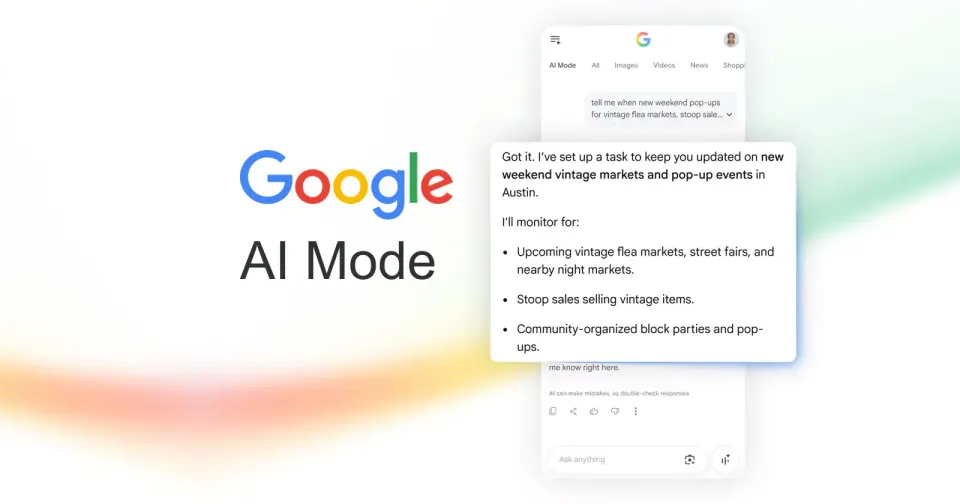
Google has expanded its AI Mode information monitoring feature to all users worldwide, moving beyond its earlier limited rollout to AI Ultra and Pro subscribers. The feature continuously checks the web for updates on topics users ask it to watch, and can also proactively suggest monitoring tasks during searches.
CMSWire argues that AI-driven content generation has expanded the pool of potential brand creators to "effectively unlimited" scale, forcing organizations to shift governance from reviewing finished outputs to controlling the data, rules, and sources that AI systems draw from — a model it calls "AI-native governance."
Iterable has unveiled a major Fall Product Release adding native RCS messaging, Nova Conversations, an Integrations Hub, and new Nova Intelligence Agents to its AI customer engagement platform. The company says the update is designed to connect fragmented customer data across the marketing stack and create a continuous intelligence loop in which every interaction informs the next.
Evalueserve, a global AI services firm, has announced a partnership with Databricks to help enterprises modernize data environments, strengthen governance, and scale AI adoption. The collaboration combines the Databricks Data + AI Platform with Evalueserve's domain and data engineering expertise, and will include a portfolio of industry-specific accelerators targeting use cases such as private credit, data quality, and data warehouse automation.
Google Search Console now offers a dedicated Generative AI performance report that lets businesses measure how often their pages appear in AI-powered search experiences such as AI Overviews and AI Mode. SEO agency TechWyse outlines how marketers should interpret the new data, warning that AI impressions risk becoming a vanity metric without proper context, and noting key gaps including the absence of query-level data and the inability to separate results by individual AI product.
Trendos Chief Commercial Officer Gintare Rimolaityte outlined a citation-audit framework in a Search Engine Journal webinar, showing marketers how to identify which sources inform AI-generated answers across Google AI Overviews, Perplexity, ChatGPT, and Gemini — and how to turn competitor citation gaps into a concrete action list.
Google is experimenting with a "Dive Deeper" feature in Discover that opens an AI-generated topic overview directly from a feed card, potentially keeping users on Google-owned surfaces before — or instead of — visiting a publisher's site. The test begins with video content and raises new measurement questions for publishers tracking the gap between AI impressions and actual referral clicks.
At its Unbound 2026 conference, HubSpot announced what it describes as its most foundational product release, introducing a Growth Context framework, a self-updating CRM, a redesigned Breeze Assistant, Marketing Studio public beta, and new advertising integrations including a first-of-its-kind ChatGPT Ads connection.
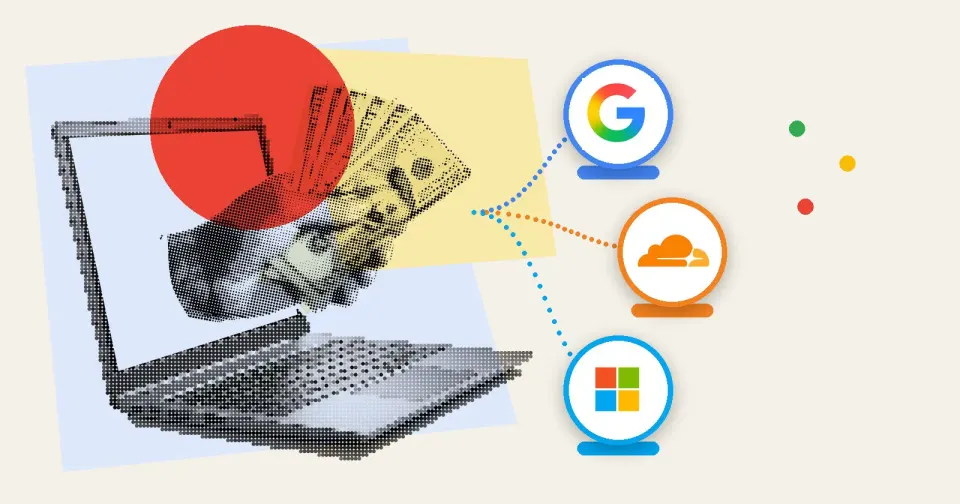
Google, Cloudflare, and Microsoft are each piloting distinct systems to compensate publishers whose content powers AI-generated responses, but the three approaches differ significantly in how value is defined, what controls site owners hold, and how transparent the resulting data is.