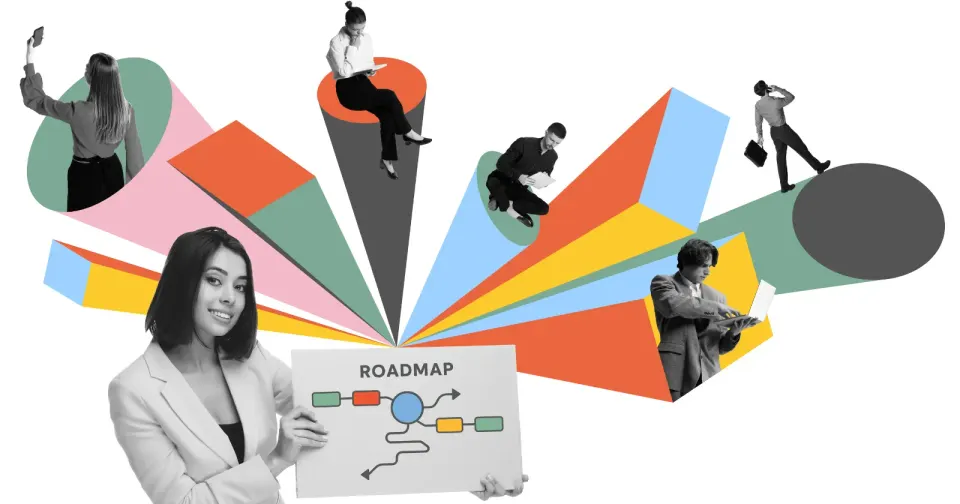
Voltage president Corey Morris has outlined a six-step SEO content roadmap designed for the AI search era, arguing that traditional keyword-volume-first strategies are insufficient when Google AI Overviews suppress organic clicks by roughly 58 percent on top-ranked pages.
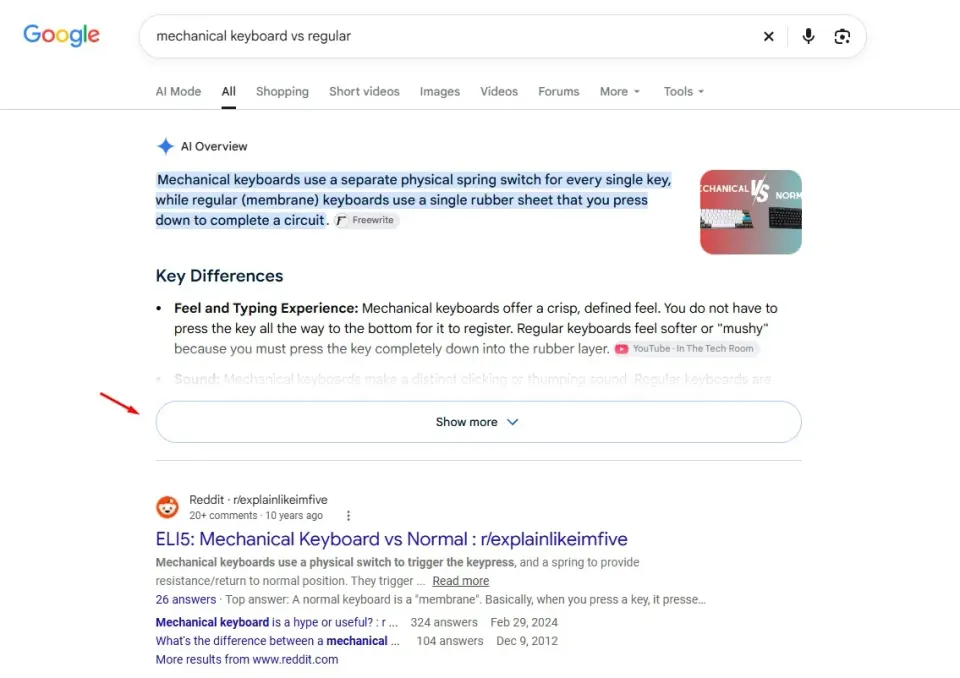
Google is again experimenting with placing AI Overview citation cards at the bottom of desktop search results rather than on the right side, marking at least the third time the company has tested this layout variation since September 2025.
Search Engine Journal has announced a webinar scheduled for October 14, 2026, in which STAT's Tom Capper will outline measurement challenges posed by AI Overviews and large language models and offer tactical solutions for enterprise SEO practitioners.
A Search Engine Journal analysis argues that AI agents do not fix poor audience data but instead scale its flaws at machine speed, cautioning marketers that citation counts in AI search results are an insufficient measure of success without underlying data quality.
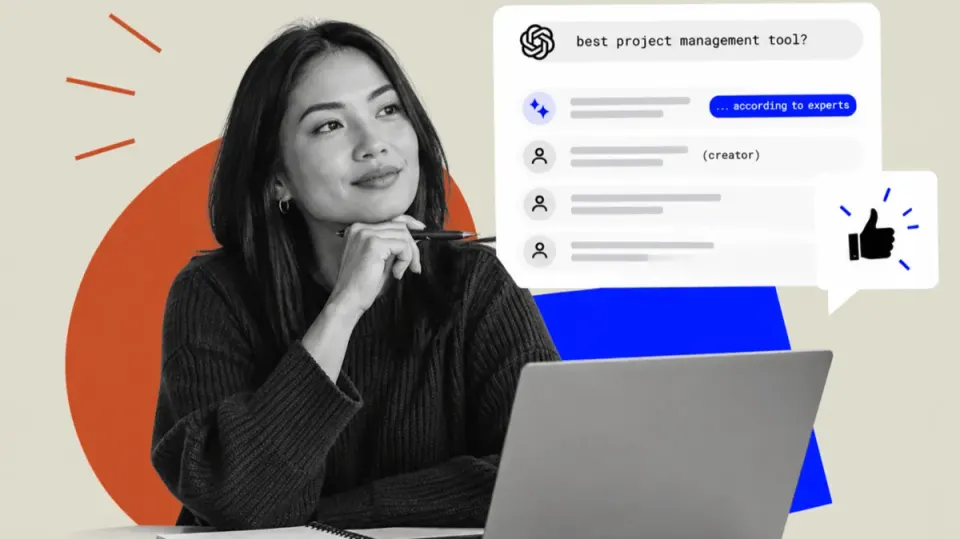
A new Creator AEO playbook from social media platform Later, based on a survey of 487 marketers, finds that as many as one in three AI answers cite creator content, while most brands continue to invest their AI search budgets in company-owned channels that AI models weigh least.
Third-party tracking data shows external links inside Google AI Overview answer text rose sharply from near zero to 26.2% between early and late September 2026, while a separate recording demonstrates that some underlined text in AI Overviews opens AI Mode rather than an external webpage. Google's own Search Console reports do not currently provide enough data to measure click-through rates from AI features.
A convergence of academic studies — including a Wharton experiment with more than 10,000 participants and a Pew Research Center tracking study of nearly 69,000 Google searches — shows that AI-generated summaries reduce how much users learn, suppress source clicks, and erode the natural feedback loop that once let readers gauge how reliable an answer was. Writing for Search Engine Journal, Duane Forrester argues the findings carry direct consequences for content publishers and B2B marketers.
Grid My Business, a local SEO platform, has launched AI Search, a feature that lets businesses and agencies measure how often and where they are mentioned across four AI platforms — ChatGPT, Google Gemini, Google AI Mode, and Google AI Overviews — across different geographic locations.
Multiple datasets from Meltwater, Tinuiti, OtterlyAI, Weglot, and Scrunch show YouTube has become the most-cited platform across eight major AI systems, with long-form videos between 10 and 20 minutes receiving the highest share of citations — though those citations can fade by roughly 43% within a month.
A tiered reference table published by SEO consultant Chris Green maps the data sources currently used by AI search tools such as Google Gemini, Microsoft Copilot, and ChatGPT, ranging from confirmed real-time grounding feeds to historical pretraining corpora, and urges search practitioners to broaden their focus beyond traditional web rankings.
Trendos Chief Commercial Officer Gintare Rimolaityte outlined a citation-audit framework in a Search Engine Journal webinar, showing marketers how to identify which sources inform AI-generated answers across Google AI Overviews, Perplexity, ChatGPT, and Gemini — and how to turn competitor citation gaps into a concrete action list.
Singapore-based Pranas has published research showing that brands with strong conventional web presences can still be underrepresented or misattributed in AI-generated answers, coining the term "AI Visibility Gap." An analysis of more than 20,000 prompts found YouTube, Instagram and Wikipedia among the most-cited sources in Google AI Overviews, while separate studies revealed that brand mentions in AI results do not reliably translate into direct website traffic, and that AI visibility can diverge significantly from real-world market share.