Top Google Rankings Do Not Guarantee AI Search Exposure, New Data Shows
Analysis of Google Search Console's new Generative AI report reveals that high organic rankings do not reliably predict visibility in AI Overviews or AI Mode. Data from a major travel site shows brand reputation and content usefulness are stronger drivers of AI search exposure than organic position alone.

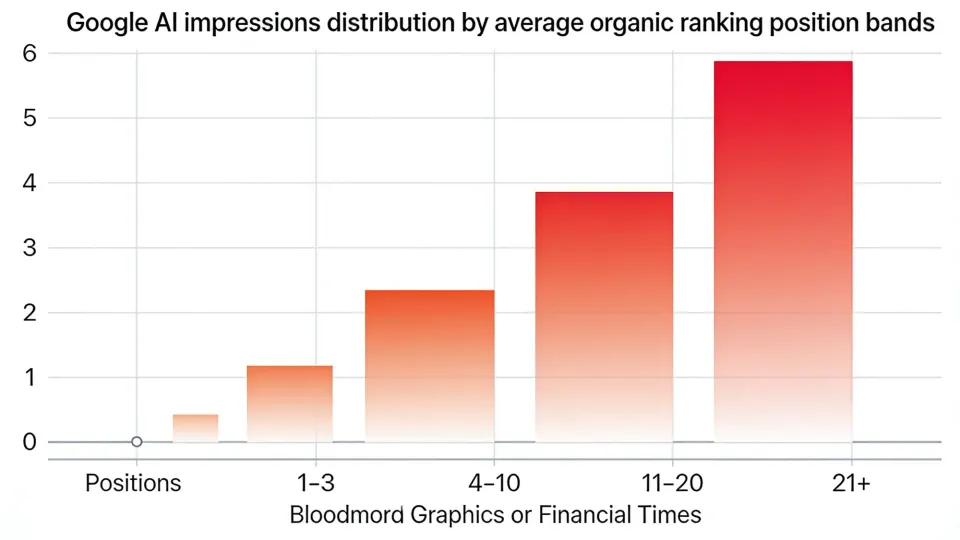
High organic search rankings are no longer a reliable path to visibility in Google's AI-powered search features, according to new data drawn from Google Search Console's Generative AI report, published by Fayfo on 28 September 2026.
Google updated Search Console in June 2026 to include a Generative AI report, giving site owners the ability to view organic and AI visibility side by side for individual pages. By 31 August 2026, Google had expanded the report globally, allowing webmasters worldwide to track impressions from AI Overviews and AI Mode for the first time.
Analysis of data from one major travel site covering June and July 2026 found the site recorded 8 million organic impressions alongside 1 million AI impressions during that period. Researchers examined 891 URLs that appeared in both organic and AI datasets. All of the top 100 AI-visible pages fell within the top 1,000 organic results, but only 57% of those held an average organic position in the top ten. One page ranked among the top 20 for AI visibility averaged an organic position above 35.
The distribution of AI impressions further challenged conventional SEO expectations. According to the Fayfo report, nearly 69% of AI impressions came from pages with average organic positions between 4 and 10, while just 0.35% came from pages in positions 1 to 3.
The report identified two principal factors distinguishing the most AI-visible pages: brand-topic association and content usefulness. Pages that performed best in AI Overviews were frequently tied to topics where the company already held strong brand recognition and third-party references across the web. Content rewarded by AI features tended to provide clear answers, practical guidance, and specific details that addressed user needs directly.
Pages with high organic traffic but low AI visibility were typically navigational or transactional in nature — categories where, the analysis noted, AI-generated answers added limited value for users.
To identify relative performance, the analysis applied an "AI overperformance index," defined as the ratio of a page's share of AI impressions to its share of organic impressions. Among 435 qualifying URLs, overperformers included guides, product explainers, and destination pages containing unique, usable information. Underperformers were typically high-traffic pages where AI answers did not align with user intent.
The new Search Console panel tracks AI Overviews and AI Mode impressions as a single aggregated metric, broken down by page, country, device, and date, but does not report clicks or queries, according to a PPC Land report cited in the Fayfo analysis. Search Engine Journal independently confirmed that the Generative AI report aggregates impressions from both AI Overviews and AI Mode without revealing clicks or positions.
The Fayfo report concluded that organic SEO remains relevant but is insufficient on its own for AI search visibility, and described the new Search Console data as a diagnostic tool for content teams rather than a simple ranking checklist.
Prepared with AI assistance by Endata and reviewed by the editorial team.