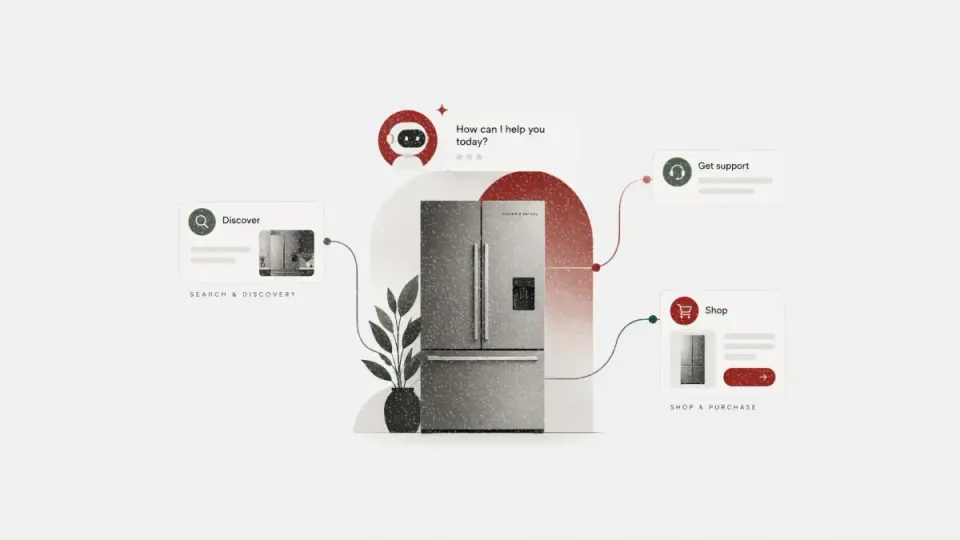
Fisher & Paykel's chief digital officer Rudi Khoury says customers are already using GPT-style tools as research interfaces, pushing the appliance company to treat AI as a marketing and discovery problem, not just a customer-service efficiency tool. The company's Agentforce-based service agent and broader roadmap reflect a view that discovery, service and conversion are converging inside conversational AI environments.
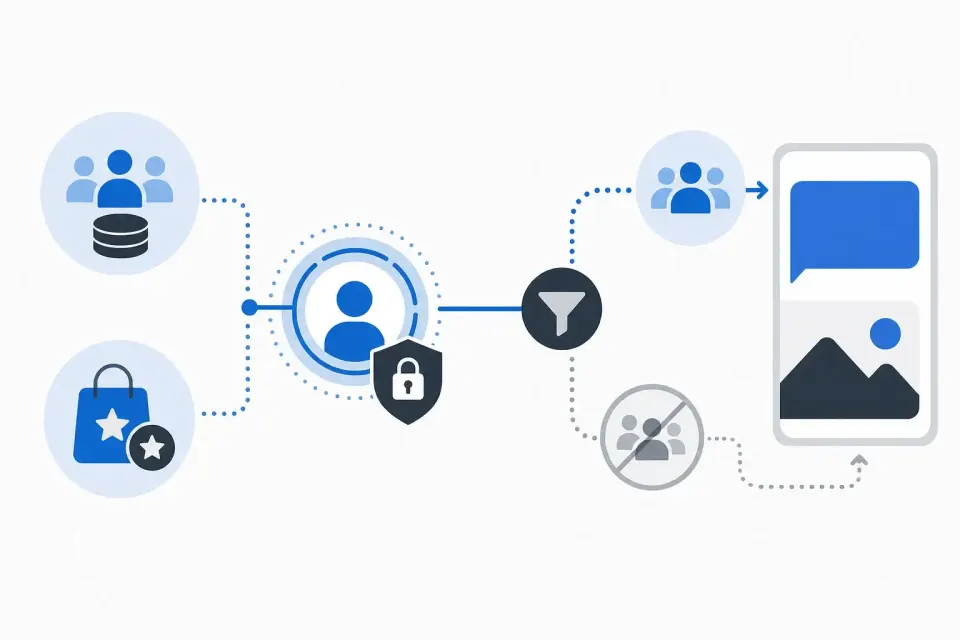
LiveRamp has expanded its ChatGPT Ads integration beyond conversion measurement to include first-party audience activation, allowing marketers to use RampID-linked CRM, loyalty, behavioral, web and app data to build Custom Audiences in 11 markets, with broader expansion planned.
Growth consultant Jason Shafton of Winston Francois outlines five measures — brand presence on buyer prompts, answer accuracy, AI referral conversions, branded search volume, and self-reported attribution — to help B2B companies determine whether their AI search activity is generating qualified pipeline, not just impressions.
Wyndham Hotels & Resorts, Opella and BetMGM are among a growing tier of advertisers building in-house AI creative teams to mass-produce digital assets, reporting dramatic output gains while exercising selective guardrails on automated content.
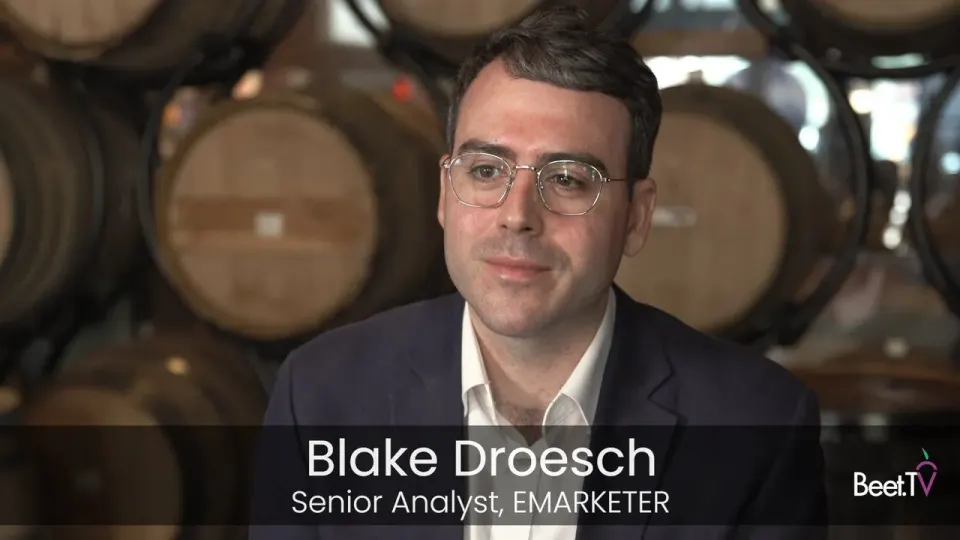
At EMARKETER's Future of Digital Summit 2026, senior analyst Blake Droesch said AI platforms surface far fewer products to consumers than traditional retail or search, creating urgency for brands to secure visibility through owned websites and strong retail channel presence — while questioning whether rising generative engine optimization (GEO) spending delivers sufficient ROI.
A Search Engine Journal analysis argues that AI agents do not fix poor audience data but instead scale its flaws at machine speed, cautioning marketers that citation counts in AI search results are an insufficient measure of success without underlying data quality.
Marketing AI firm SQREEM, led by new CEO Stephen Yap, is positioning its large behavioral model (LBM) as an alternative to language-model-based AI, arguing that tracking what people actually do online offers brands deeper audience insight than text or keyword analysis.
Iterable has unveiled a major Fall Product Release adding native RCS messaging, Nova Conversations, an Integrations Hub, and new Nova Intelligence Agents to its AI customer engagement platform. The company says the update is designed to connect fragmented customer data across the marketing stack and create a continuous intelligence loop in which every interaction informs the next.
A convergence of academic studies — including a Wharton experiment with more than 10,000 participants and a Pew Research Center tracking study of nearly 69,000 Google searches — shows that AI-generated summaries reduce how much users learn, suppress source clicks, and erode the natural feedback loop that once let readers gauge how reliable an answer was. Writing for Search Engine Journal, Duane Forrester argues the findings carry direct consequences for content publishers and B2B marketers.
Enterprise digital visibility company Conductor has appointed Wei Zheng as Chief Executive Officer, promoting her from her previous role as Chief Product Officer. The move comes as Conductor deepens its focus on Answer Engine Optimization (AEO) amid the growing influence of AI on how consumers discover and evaluate brands.
HubSpot's chief marketing officer and a senior growth executive say the inbound marketing model they helped create is no longer fit for purpose, citing a loss of 5 million blog visits in a single month and a 37% rise in AI-driven search as evidence. Writing in Fortune, Kipp Bodnar and Kieran Flanagan argue that AI answer engines have shattered the traditional buyer funnel and call for a full organisational transformation built around a new "Loop Marketing" framework.
A joint analysis by WARC, LinkedIn and LIONS Advisory, building on earlier research by LinkedIn and Bain & Company, argues that B2B brands must move beyond visibility to build verifiable "Buyability" signals — a shift made more urgent as large language models take a growing role in the purchasing journey. An examination of 700 B2B campaigns found that those with high Buyability scores were significantly more likely to report improvements in ROI and incremental revenue.