HubSpot Declares Inbound Marketing Era Over After Losing 5 Million Monthly Blog Visits to AI
HubSpot's chief marketing officer and a senior growth executive say the inbound marketing model they helped create is no longer fit for purpose, citing a loss of 5 million blog visits in a single month and a 37% rise in AI-driven search as evidence. Writing in Fortune, Kipp Bodnar and Kieran Flanagan argue that AI answer engines have shattered the traditional buyer funnel and call for a full organisational transformation built around a new "Loop Marketing" framework.

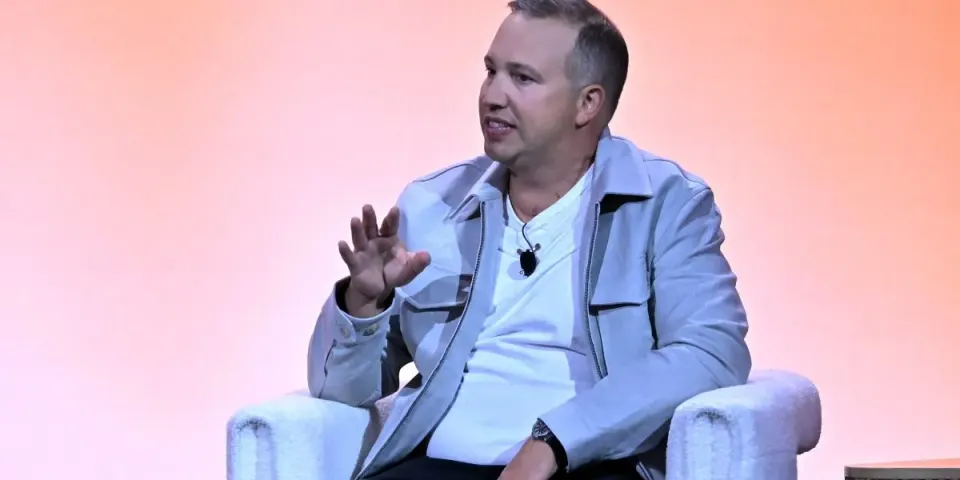
HubSpot's chief marketing officer Kipp Bodnar and executive Kieran Flanagan declared this week that the era of inbound marketing — the content-driven methodology HubSpot pioneered more than a decade ago — is over, citing dramatic traffic losses and the rising dominance of AI-powered search as the primary causes.
Writing in Fortune on 22 September 2026, Bodnar and Flanagan said HubSpot's own data made the case starkly: the company's blog lost 5 million visits in a single thirty-day period, while the authors observed AI search usage climbing and traditional search declining simultaneously. "Our blog lost 5 million visits in a thirty-day period. We saw AI search usage climbing 37% while traditional search declined 11 percent," they wrote.
The pair attributed the collapse to a structural shift in how buyers discover products. Rather than starting on Google and arriving at brand-owned content, buyers now increasingly rely on AI answer engines, social communities, and video platforms. "Customers learn about products through Reddit threads, YouTube creators, Discord communities, and AI answer engines, like ChatGPT and Gemini. They may never visit your website," the authors wrote. Industry projections cited in the piece suggest that by 2027 or 2028, as many as 95% of buyer journeys will begin inside a large language model.
Bodnar and Flanagan argued that simply adopting AI tools is insufficient. Drawing a parallel to the electrification of American factories in the late 1800s, they contended that productivity gains only materialised in the 1920s when factory managers redesigned entire workflows rather than merely swapping out machinery. "Output per labor-hour in American manufacturing, which had grown at roughly 1.2% per year for two decades, suddenly tripled to 3.5% annual growth," they noted.
The authors stated that 88% of marketers are already using AI every day, yet "fewer than half report significant improvements in outcomes," a figure they attributed to marketers applying an outdated playbook to new conditions.
In response, HubSpot says it has developed what it calls "Loop Marketing," described by the authors as "an operating system for marketing in the AI era." The framework involves articulating a brand point of view, using AI to personalise content at scale, distributing that content where buyers already are, and feeding resulting data back into the system to improve each subsequent cycle.
The authors cited internal results as validation. HubSpot rebuilt its AI chat tool to treat "every visitor as a segment of one," which they said "led to more than ten thousand sales meetings a quarter by Q4 2025." They also cited third-party examples: Morehouse College's Director of Digital Strategy Candace Bazemore used a custom AI assistant built inside HubSpot Breeze "to draft twenty-six landing pages in a single session," cutting production time by 80% and reducing pay-per-click CPM by more than 70%. Mercantile Bank, they added, used AI to surface campaign assets from years of previously unused CRM data.
On the broader shift in marketing accountability, the authors pointed to survey data indicating that 88% of marketing leaders are now directly responsible for hitting a revenue target, describing this as "the clearest signal that the job itself has changed."
The piece, framed as an excerpt from a book, does not include responses from competitors or independent analysts, and the claims about Loop Marketing results have not been independently verified.
Prepared with AI assistance and reviewed by the editorial team.