Pinterest has unveiled a standardized multimodal AI infrastructure built with Nvidia's Blackwell B200 GPUs and open-source Dynamo framework, aiming to make visual search faster and more cost-efficient across its fleet of roughly 14,000 Nvidia GPUs. Company benchmarks claim precomputing visual representations reduced overall latency by 7.3 times and cut inference costs to less than 8% of closed proprietary models.
OpenAI updated ChatGPT's memory system in June 2026, replacing manual "remember this" commands with an automated profiling process the company calls "dreaming." The chatbot now independently decides what to retain from conversations, raising accuracy and control concerns for business professionals.
At its Unbound 2026 conference, HubSpot announced what it describes as its most foundational product release, introducing a Growth Context framework, a self-updating CRM, a redesigned Breeze Assistant, Marketing Studio public beta, and new advertising integrations including a first-of-its-kind ChatGPT Ads connection.
A randomized field experiment by researchers from the University of Pennsylvania and Northeastern University found that Google's AI Mode significantly reduces click-through rates to external websites and lowers user satisfaction, directly contradicting public statements made by Google executives.
Shopify CEO Tobi Lütke has named a new workplace phenomenon born of AI overuse: the "slop grenade," referring to AI-generated output handed to a colleague without being read first. Speaking on The Knowledge Project podcast released September 15, 2026, Lütke warned that lazy AI use has shifted work rather than eliminated it, with coworkers bearing the review cost. The comments arrive roughly 17 months after Lütke made AI use a baseline expectation at Shopify, and amid rising third-party data showing growing freelance demand for AI output correction.
Retail media optimization platform Quartile announced on September 21, 2026 that it has become a technology partner supporting advertising in ChatGPT, giving brands access to ads within the conversational AI platform through Quartile's existing tools and workflows.
Nkateko Khosa, Business Unit Director at BOLD, argues that executives and their communications teams have fallen into a "thought leadership trap" by prioritising safe, consensus-driven content over genuine insight — rendering most of what they publish invisible to the audiences they seek to influence.
Meituan's technical team has published a detailed account of how it rebuilt its service-retail search ranking system across three iterative phases, replacing traditional keyword matching with large-language-model semantic representations to handle complex, non-standardised local-life queries.
Sponsored ads appeared in 47% of ChatGPT conversations about video games and consoles tracked by Comscore in June 2026, up sharply from 3% in March, according to the firm's Q2 2026 AI Intelligence Report. Ad presence also rose across toys, hobbies, books, music, and video categories over the same period.
Conversational AI tools are fragmenting the traditional retail search journey, forcing brands to rethink how they structure product data, create content, and measure visibility. Experts say success now hinges on verified product knowledge graphs, schema markup, and cross-functional teams — not keyword density and backlinks.
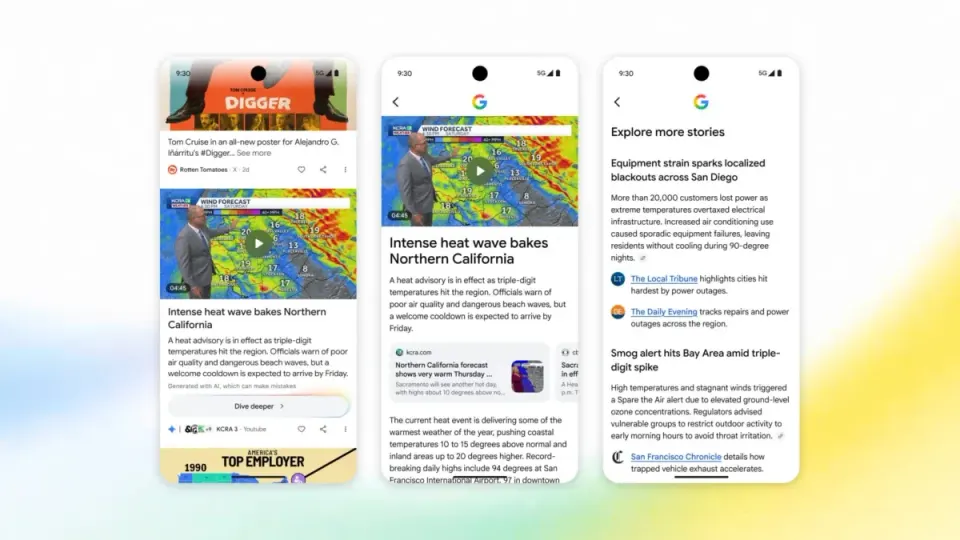
Google is rolling out an experimental "Dive deeper" feature in Google Discover that presents users with an AI-generated topic overview before linking to publisher articles, prompting concern from content creators and SEO professionals about potential declines in referral traffic.
A new roundup published by Explosion.com identifies ten LinkedIn marketing agencies redefining B2B lead generation by prioritising pipeline contribution over platform-native engagement metrics, with relevance, ICP precision, and multi-channel coordination emerging as the defining differentiators heading into 2026.