OpenAI launches Dots, persistent AI agents aimed at continuous marketing and enterprise work
OpenAI introduced Dots on September 29, 2026 — persistent AI agents powered by GPT-6 Astra that can maintain context, operate across more than 4,000 connected apps, and continue working toward goals without waiting for a new user prompt. The rollout begins across Pro, Business Premium, and Enterprise plans, with implications for marketing operations, content workflows, and enterprise governance.

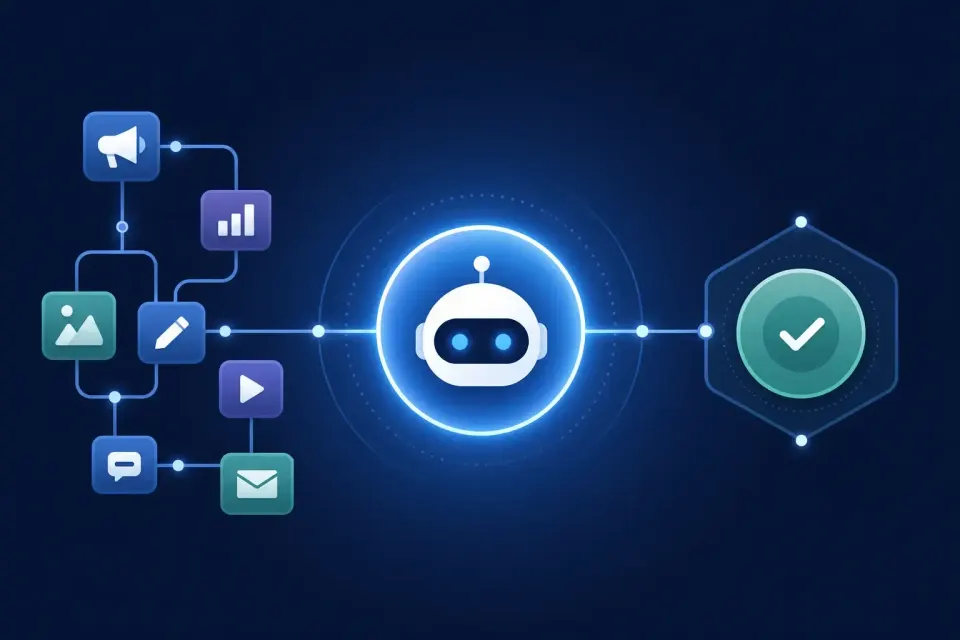
OpenAI launched Dots on September 29, 2026, a new class of persistent AI agents designed to keep working after a user steps away — a shift the company is framing as a move beyond the familiar prompt-and-response model that has defined most generative AI tools to date.
Unlike standard chatbot sessions, a Dot is assigned an ongoing goal rather than a single task. According to ContentGrip, each Dot gets its own cloud computer and browser, can connect to applications a user has authorised, and can continue working across projects without requiring every step to be manually orchestrated. Users can inspect the Dot's computer and message it through ChatGPT, Slack, or Microsoft Teams.
OpenAI described the agents as "powered by GPT-6 Astra" and said they "can work toward goals 24/7 and connect to more than 4,000 apps through OpenAI's plugin ecosystem." The initial rollout covers Pro, Business Premium, and Enterprise plans in eligible markets, with specialist Dots for organisations beginning through focused enterprise pilots.
Competitive context
Reuters reported that OpenAI is positioning Dots against Meta's Muse as companies race to make autonomous AI useful across everyday work. By September 29, 2026, more than 35 million weekly users were using Codex and ChatGPT Work, according to Reuters citing OpenAI.
OpenAI is also working with Microsoft to bring specialist Dots into Agent 365 governance controls, according to ContentGrip. The source notes that the competitive question is "increasingly which agent can operate across enough of a company's existing stack, preserve useful context, and pass enterprise security and governance requirements."
Implications for marketing and content operations
ContentGrip identifies recurring operational tasks as the near-term opportunity for marketing teams: checking campaign feedback, updating launch materials, preparing recurring reports, monitoring incoming requests, and moving drafts through review. OpenAI's own examples, as relayed by ContentGrip, include a product-launch workflow where a Dot learns audience, positioning, and creative standards, and a content production workflow where an agent can "process an interview transcript, identify clips, prepare show notes, and draft social posts for approval."
ContentGrip notes a key operational trade-off: "An agent that works continuously will reproduce weak instructions continuously too," making brand voice, escalation rules, data access, approval thresholds, and the definition of a finished deliverable "operating inputs rather than documentation that sits beside the workflow."
Control and governance model
OpenAI says Dots use built-in rules to decide when they can act independently and when they need approval, and that users can create Custom Rules that allow, require approval for, or block specific actions. When a user is not actively working with a Dot, OpenAI says "proactive research uses connected apps through read-only tools," while sensitive tasks such as changing passwords remain user-controlled.
ContentGrip advises that pilots should track time saved, error rate, number of human approvals, and how often the agent needs its instructions corrected — rather than measuring output speed alone.
Prepared with AI assistance by Endata and reviewed by the editorial team.