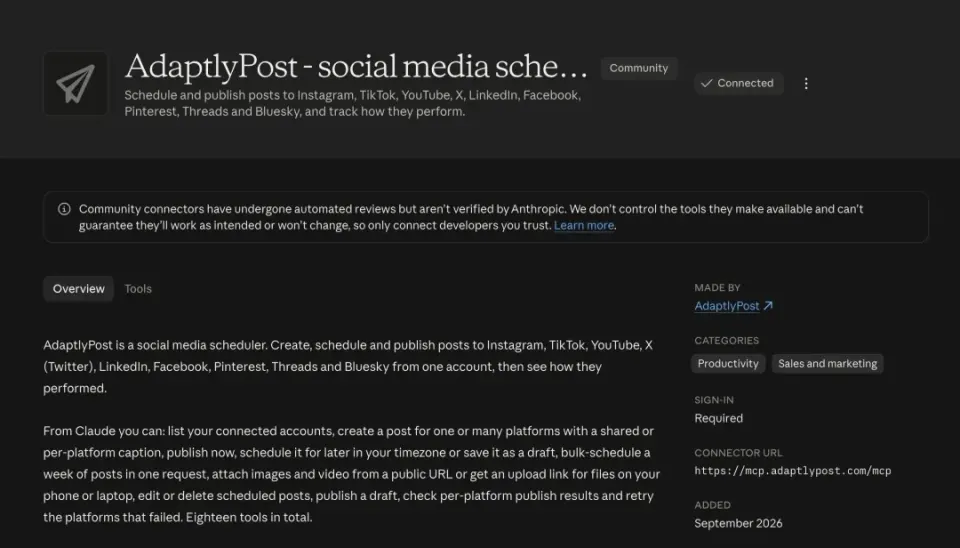
AdaptlyPost, a social media scheduling platform based in Gdansk, Poland, has made its connector available in Anthropic's Claude directory, enabling Claude users to create, schedule, publish and analyse posts across ten social networks without leaving a chat session.
As AI agents increasingly handle product discovery and purchasing on behalf of consumers, a new category of startup is emerging to help US brands optimise their visibility to these non-human buyers — shifting marketing strategy from emotional appeal to structured data and logic.
Fisher & Paykel's chief digital officer Rudi Khoury says customers are already using GPT-style tools as research interfaces, pushing the appliance company to treat AI as a marketing and discovery problem, not just a customer-service efficiency tool. The company's Agentforce-based service agent and broader roadmap reflect a view that discovery, service and conversion are converging inside conversational AI environments.
At Ibexa's Orchestration Day in Paris on 17 June 2026, CEO Bertrand Maugain argued that generative AI has worsened martech stack fragmentation rather than resolving it, and that enterprises need integrated orchestration platforms and human "super-orchestrators" to govern AI-driven campaigns and maintain consumer trust.
Contentstack released a September 2026 update to its Assets add-on introducing AI-generated metadata, background duplicate-image detection and a new self-service subscription model, alongside headless CMS improvements covering bulk operations, multi-provider SSO and an API behavior change.
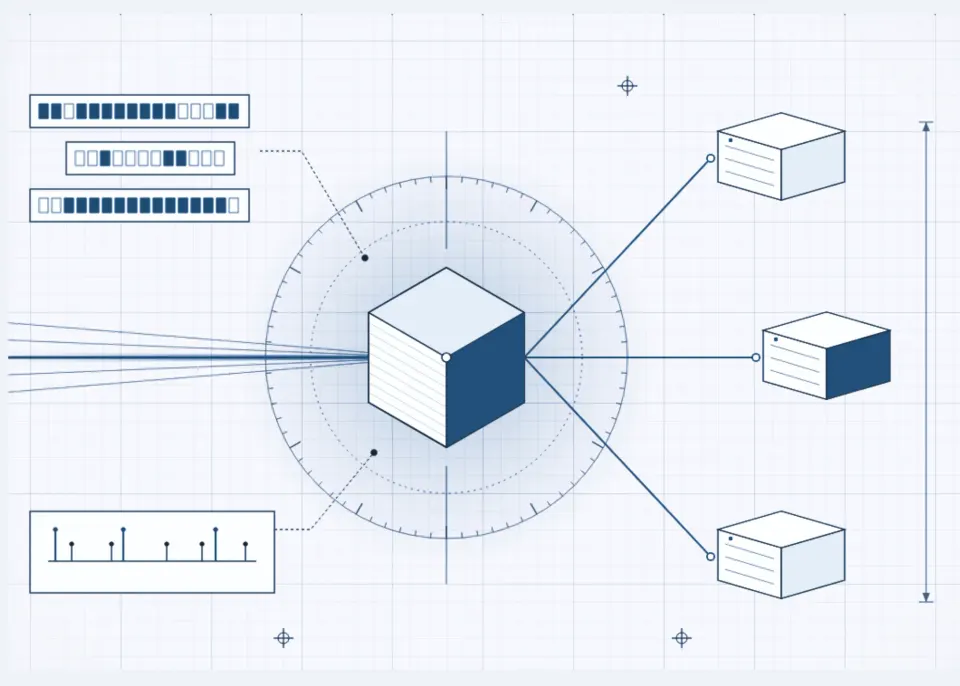
Perplexity has released Photon, an in-house retrieval and ranking engine written in Rust, replacing a forked open-source engine. The company reports that production p99 latency dropped from roughly 800 ms to 65 ms. Photon now handles all production search traffic and powers a new Fast Search mode in the Perplexity Search API, priced at $1 per 1,000 requests.
Google has expanded its AI Mode information monitoring feature to all users worldwide, moving beyond its earlier limited rollout to AI Ultra and Pro subscribers. The feature continuously checks the web for updates on topics users ask it to watch, and can also proactively suggest monitoring tasks during searches.
Bloomberg has launched Bloomberg Enterprise Model Context Protocol (MCP), an AI access layer for its Data License Plus offering that enables client AI agents to discover, understand, and retrieve licensed Bloomberg data across more than 100 million securities and over 50,000 fields via a standardized interface.
OpenAI introduced Dots at DevDay on September 29, 2026, bringing persistent AI agents to ChatGPT that can carry context across marketing tasks — from research to content drafting — without requiring a new prompt each time conditions change. The launch initially targets ChatGPT Pro, Business Premium and Enterprise users, with one Dot per user. No independent performance data has yet been published.
OpenAI introduced Dots on September 29, 2026 — persistent AI agents powered by GPT-6 Astra that can maintain context, operate across more than 4,000 connected apps, and continue working toward goals without waiting for a new user prompt. The rollout begins across Pro, Business Premium, and Enterprise plans, with implications for marketing operations, content workflows, and enterprise governance.
CMSWire argues that AI-driven content generation has expanded the pool of potential brand creators to "effectively unlimited" scale, forcing organizations to shift governance from reviewing finished outputs to controlling the data, rules, and sources that AI systems draw from — a model it calls "AI-native governance."
Multiple industry surveys show a widening gap between the mandate handed to customer experience leaders to deploy AI and the decision-making authority they actually hold, with Gartner, Grant Thornton and Deloitte data pointing to fragmented ownership, weak governance readiness and customer outcomes left undefended.