Google Search Console now offers a dedicated Generative AI performance report that lets businesses measure how often their pages appear in AI-powered search experiences such as AI Overviews and AI Mode. SEO agency TechWyse outlines how marketers should interpret the new data, warning that AI impressions risk becoming a vanity metric without proper context, and noting key gaps including the absence of query-level data and the inability to separate results by individual AI product.
A September 2026 expert opinion piece in Nation's Restaurant News argues that foodservice equipment manufacturers and ingredient brands must rethink their go-to-market strategies as B2B buyers now complete approximately 70% of their purchasing journey independently and 84% have already chosen a preferred vendor before conversations begin — a shift that makes pre-sales influence the decisive battleground for suppliers.
A webinar hosted by Go Fish Digital and OpenAI outlined the distinct roles of paid ChatGPT ads and earned generative engine optimization (GEO) visibility, explaining how to measure brand presence in AI-generated answers and why website evidence must come first.
A Martech360 analysis published 23 September 2026 compares traditional keyword-based site search with intent-aware AI search. While exact-match retrieval retains value for precise queries, semantic and vector-based approaches better handle natural-language queries. The report cites Google's AI Mode reaching 1 billion monthly active users in May 2026 and references vendor documentation from IBM, Microsoft, OpenAI and AWS to illustrate the technical and commercial stakes.
Google has announced plans to phase out its 15-year-old Dynamic Search Ads format in favour of AI Max, with automatic migration set for February 2027, while OpenAI is simultaneously rolling out new advertising products for ChatGPT, including Sponsored Agents and direct ad purchasing in India and other markets.
New IAB Europe research covering 50 ad executives across 44 European markets finds that 58% expect agentic ad buying to reach operational use or scale within a year, though adoption gaps between large and small organisations, unresolved standards, and skepticism over real-world impact temper the outlook.
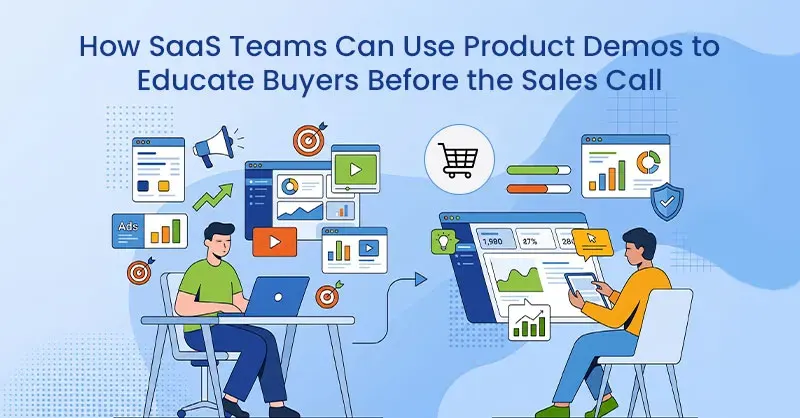
A September 2026 article by TechWyse argues that SaaS companies should deploy self-guided, interactive product demos earlier in the buying journey to address growing buyer preference for rep-free experiences, citing Gartner data showing 67% of B2B buyers prefer to avoid sales representatives.
A Forrester-sourced analysis published on CustomerThink argues that AI agents are triggering the most significant transformation in business software since cloud computing, introducing what researchers call an "agentic business fabric" that replaces human-navigated systems of record with AI-orchestrated workflows — while warning that back-office systems face far steeper governance hurdles before autonomous execution can be trusted.
Jaggaer has completed its acquisition of Ivoflow, a Germany-based spend and price intelligence platform for direct materials, with the transaction closing on September 11, 2026. The deal is intended to help manufacturers determine whether the prices they pay for parts reflect actual market conditions, using AI to automate the verification of supplier price-increase requests.
AI developer infrastructure company Parallel reports that GPT-6 Astra halved both the time and cost of complex, multi-source labor-market research tasks compared with previous frontier models, while maintaining output quality and enabling more efficient multi-agent workflows.
Global communications agency TEAM LEWIS has unveiled Orbital OS1, an AI-powered operating system built to help multi-market organisations connect marketing intelligence, creativity, and public-facing delivery within a single platform, with human judgement retained at the centre of decision-making.
Stensul has announced the beta availability of an integration with Salesforce Marketing Cloud Next, enabling enterprise marketing teams and AI agents to create and personalize email campaigns using Salesforce data while maintaining governance controls. General availability is planned for Q4 2026.