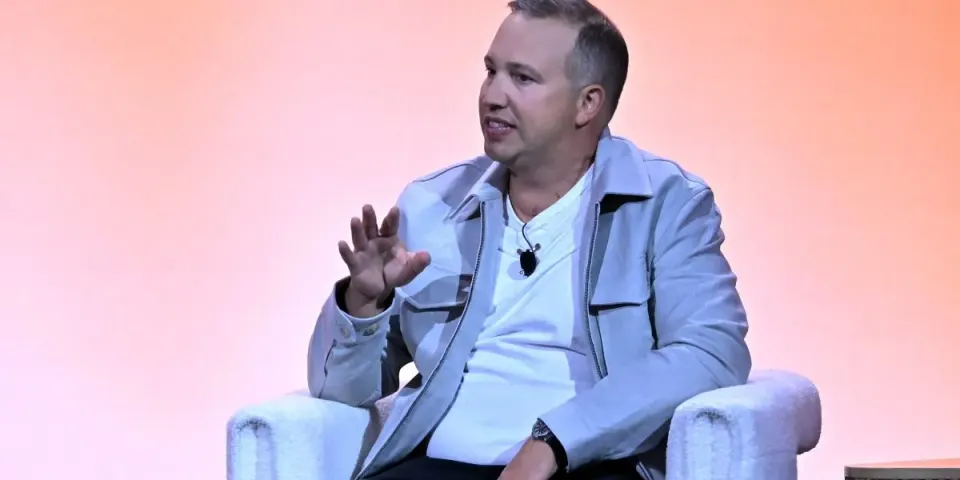
Voltage president Corey Morris has outlined a six-step SEO content roadmap designed for the AI search era, arguing that traditional keyword-volume-first strategies are insufficient when Google AI Overviews suppress organic clicks by roughly 58 percent on top-ranked pages.
As AI agents increasingly handle product discovery and purchasing on behalf of consumers, a new category of startup is emerging to help US brands optimise their visibility to these non-human buyers — shifting marketing strategy from emotional appeal to structured data and logic.
Bloomberg has launched Bloomberg Enterprise Model Context Protocol (MCP), an AI access layer for its Data License Plus offering that enables client AI agents to discover, understand, and retrieve licensed Bloomberg data across more than 100 million securities and over 50,000 fields via a standardized interface.
CMSWire argues that AI-driven content generation has expanded the pool of potential brand creators to "effectively unlimited" scale, forcing organizations to shift governance from reviewing finished outputs to controlling the data, rules, and sources that AI systems draw from — a model it calls "AI-native governance."
Google's August 2026 spam update completed its rollout on August 21 and eliminated hundreds of thousands of search rankings for sites relying on AI-generated content, thin affiliate setups, and misleading redirects. Independent analysis found that 16.71% of URLs previously ranking in the Top 10 fell beyond position 100, with some domains losing rankings for more than 200,000 search queries virtually overnight.
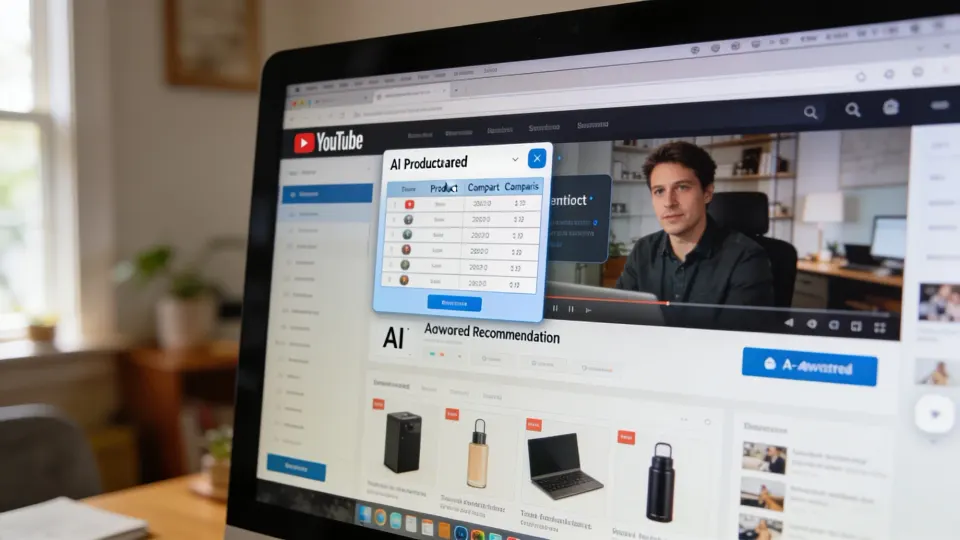
YouTube has expanded its Ask YouTube tool with AI-powered shopping features, allowing viewers to request product recommendations, comparisons, and buying guidance directly on the video watch page. Powered by a custom Gemini AI model, the feature saw more than 140 million users in June alone — a rise of over 500% since December. YouTube's Shopping affiliate program is also set to expand to 35 countries by year-end.
A Search Engine Journal analysis argues that AI agents do not fix poor audience data but instead scale its flaws at machine speed, cautioning marketers that citation counts in AI search results are an insufficient measure of success without underlying data quality.
A new Creator AEO playbook from social media platform Later, based on a survey of 487 marketers, finds that as many as one in three AI answers cite creator content, while most brands continue to invest their AI search budgets in company-owned channels that AI models weigh least.
A convergence of academic studies — including a Wharton experiment with more than 10,000 participants and a Pew Research Center tracking study of nearly 69,000 Google searches — shows that AI-generated summaries reduce how much users learn, suppress source clicks, and erode the natural feedback loop that once let readers gauge how reliable an answer was. Writing for Search Engine Journal, Duane Forrester argues the findings carry direct consequences for content publishers and B2B marketers.
Google's invitation-only pay-per-value pilot, which offers direct payments to publishers whose content powers AI-generated answers, is drawing cautious and divided responses from the media industry. While some see it as a step forward, publishers and industry leaders warn that opaque payout formulas, limited access, and structural power imbalances could leave smaller outlets worse off.
HubSpot's chief marketing officer and a senior growth executive say the inbound marketing model they helped create is no longer fit for purpose, citing a loss of 5 million blog visits in a single month and a 37% rise in AI-driven search as evidence. Writing in Fortune, Kipp Bodnar and Kieran Flanagan argue that AI answer engines have shattered the traditional buyer funnel and call for a full organisational transformation built around a new "Loop Marketing" framework.
Google Search Console now offers a dedicated Generative AI performance report that lets businesses measure how often their pages appear in AI-powered search experiences such as AI Overviews and AI Mode. SEO agency TechWyse outlines how marketers should interpret the new data, warning that AI impressions risk becoming a vanity metric without proper context, and noting key gaps including the absence of query-level data and the inability to separate results by individual AI product.