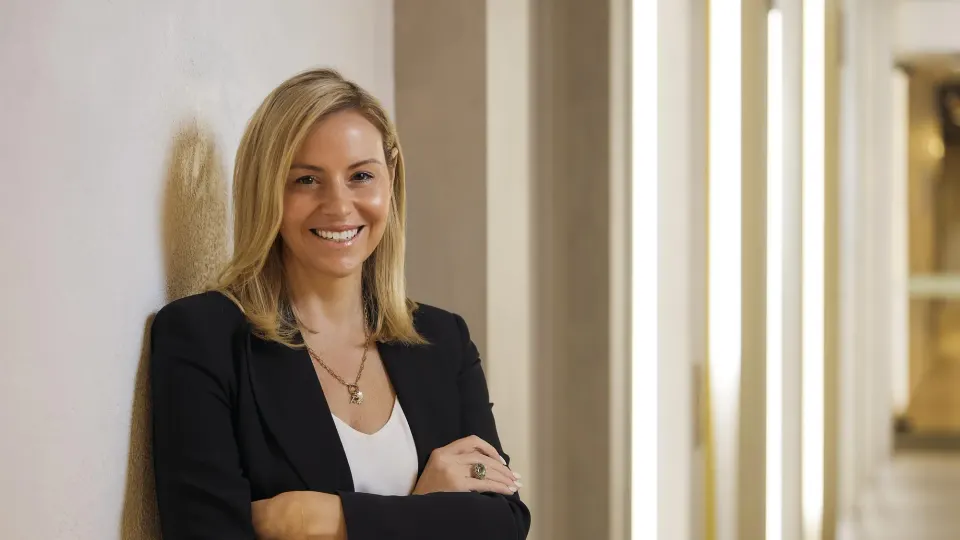
Stagwell's Chief AI Officer John Kahan Details Palantir Partnership and Differential Privacy Strategy
Stagwell's chief AI officer John Kahan has outlined how the challenger holding company is using Palantir's platform-agnostic data infrastructure and Harvard-certified differential privacy to build an AI-powered marketing platform it says outflanks competitors on flexibility and data protection.


Nearly a year after Stagwell announced a partnership with defense and surveillance firm Palantir to build an AI-powered data and audience platform, the holding company's chief AI officer John Kahan has explained the strategic rationale behind the deal — and why he believes it sets Stagwell apart from rival agency groups.
Kahan, who also serves as interim CEO of Stagwell's Marketing Cloud, was appointed to oversee the Palantir work by Stagwell CEO Mark Penn. According to Digiday, Kahan had planned to ease into retirement before Penn persuaded him to take the role. Kahan brings roughly 40 years of experience in data and analytics, including tenures at IBM and Microsoft, and previously chaired Stagwell's board of directors. Elspeth Rollert has since taken over The Marketing Cloud having returned from maternity leave.
Speaking to Digiday in New York — where he was attending UN General Assembly health-related sessions as a board member of the Novartis Foundation — Kahan described Palantir's value as rooted in its neutrality across cloud providers and large language models. "If you really think about Palantir, it's a set of platform capabilities that is agnostic to the LLM or the cloud provider, and so I can run Stagwell's targeting machine on any cloud I want, and I can take advantage of the latest capabilities in the world," he said.
Kahan framed the platform's ultimate goal as customer-operated rather than agency-run. "It's not intended to be run by us. It's actually intended eventually to be run by each of our customers," he told Digiday, adding that any brand could connect it directly to their supply chain system to inform advertising decisions based not only on consumer demand but on what a business can actually deliver.
On the competitive landscape, Kahan distanced Stagwell from proprietary approaches taken by some rivals. "Some of our competitors like to be proprietary — we don't do that," he said. He also noted that Stagwell is currently building sovereign models with customers on open-weight models sourced from Nvidia, citing cost reduction and data protection as key motivations.
A central pillar of Stagwell's differentiation claim is its use of differential privacy — a technique Kahan said he donated to Harvard University's Institute of Quantitative Social Science while at Microsoft. Unlike standard privacy methods that strip data out, differential privacy adds statistical noise to a dataset. "Instead of having, say, five African Americans on a city block, maybe it has eight African Americans, and it does it at every level of the data set," Kahan explained. He noted that the U.S. Supreme Court ruled it is the only version of data technology they would allow to be used in the last census. Stagwell subsequently hired Harvard to implement the method within the Palantir system.
Kahan said Stagwell publishes its algorithms and that Harvard certifies them and provides the code used to deliver the data. He cited the scale of Stagwell's dataset: "our data set alone is over 1 billion email addresses, 260 million individuals, 160 million households," along with approximately 60 years of Harris Poll data, which he said enables insight into how people think, not just what they do — a distinction he drew against competitors such as Epsilon, which he characterised as "really mostly behavioral data."
Regarding the broader battle between AI model providers — including reported moves such as Amazon cutting off Meta's Muse — Kahan said the conflict would not undermine Stagwell's approach. "The world I came from — and the world I still am in pretty heavily with Microsoft — is a world of openness, where you can use the best models to solve the best scenarios," he said, adding that Stagwell is not competing with OpenAI, Facebook or Google, and counts those companies among its customers.
Prepared with AI assistance and reviewed by the editorial team.