Nestlé taps WPP to build integrated AI content model for Greater China
Nestlé has appointed WPP to design and operate a centralized AI-driven content operating model across its Greater China brand portfolio, targeting production of more than 35,000 content pieces annually and connecting social, commerce, media and production through a single orchestration layer powered by WPP Open | China.

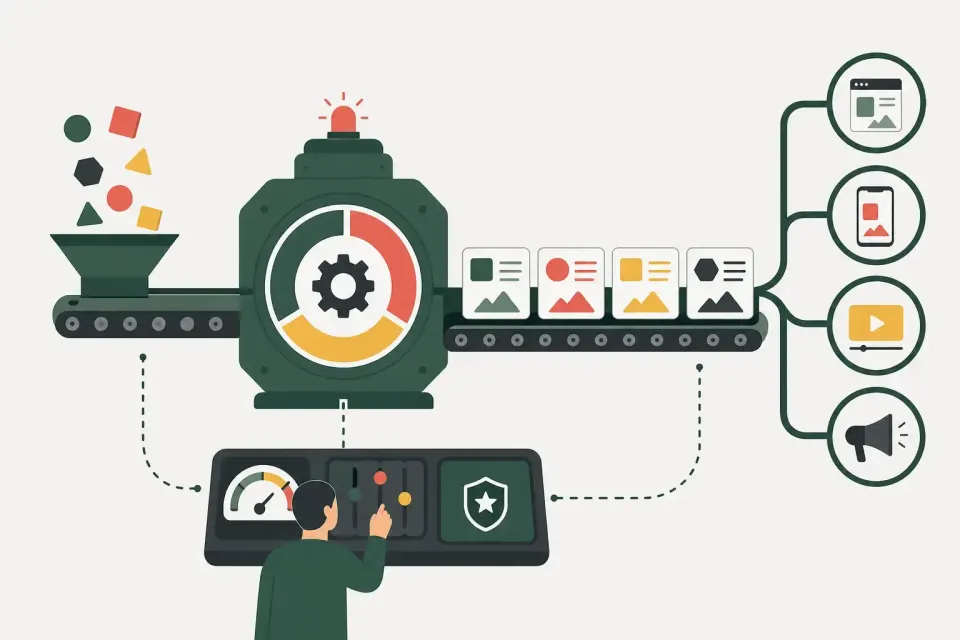
Nestlé has appointed WPP to build and run an integrated content model across its Greater China portfolio, bringing social planning, creator work, commerce, media and production into a shared operating structure. The announcement, reported by ContentGrip on 23 September 2026, marks a significant step in moving AI content production from experimentation into core brand operations.
The model is designed to produce more than 35,000 content pieces annually for Nestlé's Greater China portfolio. WPP Open | China will provide what ContentGrip describes as "the agentic layer," with a delivery hub in Wuxi handling scaled production. Nestlé's existing creative agencies and media partners are expected to remain part of the wider ecosystem rather than being replaced outright.
ContentGrip noted that the arrangement is "not a straightforward agency consolidation, and it is not merely a technology deployment," characterising it instead as "an attempt to create an operating layer that can translate brand direction into platform-specific work without rebuilding the process for every channel."
WPP says the model is designed to support scaled output across Nestlé brands including Nescafé and Purina, as well as the company's food, nutrition and confectionery lines. The system is tailored to China's digital, social, media and commerce environment, where platform-specific execution — including creator relationships and commerce mechanics — is central to the brief.
Nestlé's Greater China CMO Allen Cai framed the challenge as "the intersection of AI, scale and customization," according to the ContentGrip report. The publication noted that none of the three factors can be optimised independently: greater scale without customisation risks generic output, while customisation without shared infrastructure becomes costly and difficult to govern.
ContentGrip observed that at the planned volume, creative governance cannot rely on manual inspection of every handoff, and that "brand rules, product information, channel requirements and approval logic need to travel with the work." The report characterised AI in this model as becoming "less visible as a standalone tool and more consequential as connective tissue" within the broader content supply chain.
The Wuxi production hub is designed to combine automation with human expertise across social, creative, production and media functions, rather than treating AI generation as a self-contained shortcut. ContentGrip interpreted the regional setup as a test of "whether a large brand portfolio can use one orchestration layer while maintaining the differences that give individual brands meaning."
Prepared with AI assistance and reviewed by the editorial team.