Credibility Gap, Not Capability Gap, Costs B2B Suppliers Winnable Deals, Study Finds
New research by Emmett and Churchman surveying 200 UK senior technology decision-makers finds that capable B2B suppliers routinely lose deals not because they lack ability, but because they fail to prove their credibility — a phenomenon the firm calls the "Commercial Credibility Gap."

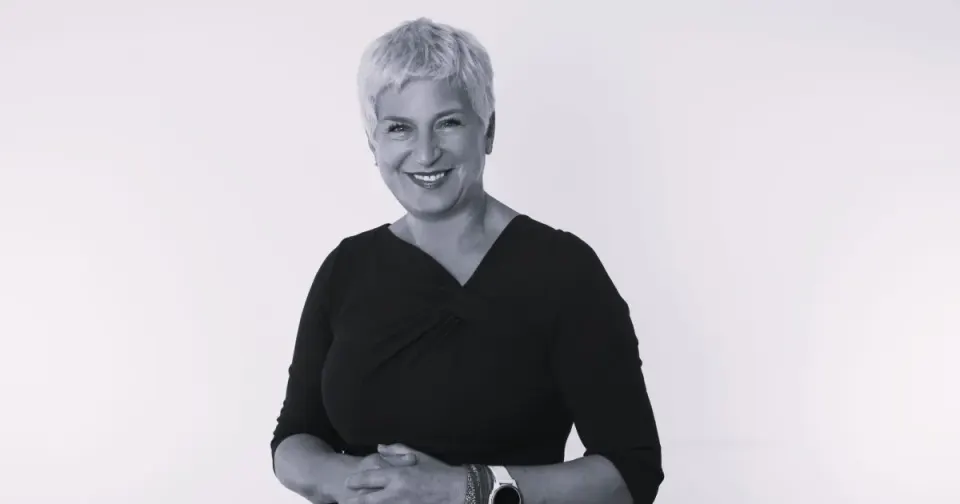
A new study from UK communications consultancy Emmett and Churchman has identified a structural problem in B2B sales: capable suppliers are consistently losing deals they should win, not because of inferior products or services, but because buyers cannot confidently recognise, believe, or internally defend their choice of supplier.
The research, titled The Trust Advantage 2026, surveyed 200 UK senior technology decision-makers and conducted in-depth interviews with 19 senior business leaders. It was published on 24 September 2026 and analysed by the firm's managing director, Lorraine Emmett, writing for PRmoment.
The Commercial Credibility Gap
Emmett defines the central problem as the distance between what a business knows it can deliver and what a buyer can confidently recognise and act upon. "Capability exists within your business, while credibility exists in the buyer's mind," she writes. "You need both, and having one doesn't guarantee the other."
According to the study, 45% of senior technology decision-makers said capable suppliers fail because they struggle to prove their credibility. A further 19% said capable suppliers never reach the shortlist because buyers do not know enough about them.
The research identifies three sequential tests a supplier must pass: whether a buyer can see enough evidence to take the business seriously; whether the buyer believes what the supplier claims; and whether the buyer can defend the choice internally to stakeholders such as finance, security, or the board. Emmett notes that a supplier "can pass one test and fail the next."
Trust Killers in the Room
The study found that over-promising is the leading destroyer of trust once a supplier is engaged. Forty percent of respondents named inflated claims without proof as the single biggest way to kill trust, ranking it above inconsistent messaging and evasive answers.
However, the research also found that honesty about limitations can work in a supplier's favour. Forty-one percent of those surveyed said a clear, honest discussion of limitations, risks and trade-offs actually strengthens their confidence in a supplier, according to Emmett's account of the findings.
Emmett notes that the CEOs interviewed "were explicit that they weren't looking for suppliers who promised nothing would go wrong. They were watching for how a supplier would behave when something did."
Lesser-Known Suppliers Can Compete
The research contains a finding that may encourage smaller or newer market entrants. Fifty-seven percent of decision-makers said they are likely or very likely to choose a lesser-known supplier over an incumbent if they trust the challenger more. Emmett cautions, however, that this requires effort: "your evidence has to work harder than the incumbent's does, because you don't have their name recognition doing any of the work for you."
Leadership Must Own Credibility
Emmett argues that commercial credibility cannot be delegated solely to marketing functions. She describes trust and credibility as "a jigsaw," with sales, marketing, delivery, and operations each holding different pieces, while leadership "holds the corners and gives the puzzle its shape." She adds that "even in a thousand-piece jigsaw, if one piece is missing, that's the bit everyone notices."
The study also underscores a broader competitive framing: "If your biggest competitor isn't a better business, just an easier one to believe, what exactly are you doing to change that?" Emmett writes.
The Trust Advantage 2026 was produced by Emmett and Churchman. The study's findings were first reported by PRmoment on 24 September 2026.
Prepared with AI assistance and reviewed by the editorial team.